
Ford Fluid Maintenance Guide: Cooling, Transmission, and Differential Service
Ford fluid maintenance helps protect the systems that keep your truck, SUV, van, or fleet vehicle ready for daily work. Coolant manages engine heat, transmission fluid supports smooth shifting, and differential oil protects the gears that handle load and traction. For Ford owners who tow, haul, idle, commute, or rack up high mileage, using OEM-fit fluids and replacement parts can reduce avoidable wear while helping control long-term repair costs.
The Ford-specific problem: heat, load, and heavy use wear fluids down
Ford vehicles are often used as more than basic transportation. F-150, Super Duty, Ranger, Bronco, Explorer, Expedition, and Transit models may deal with trailer weight, jobsite stops, hot weather, long idle time, and repeated short trips. Those conditions can break down fluids faster than light-duty driving.
When coolant, transmission fluid, or gear oil gets old, low, contaminated, or mismatched to the vehicle, heat and friction increase. That can lead to overheating, harsh shifts, gear noise, leaks, and expensive downtime. For fleet users, one ignored fluid issue can also mean missed routes, delayed jobs, or a vehicle sitting out of service.
What each fluid does for everyday reliability
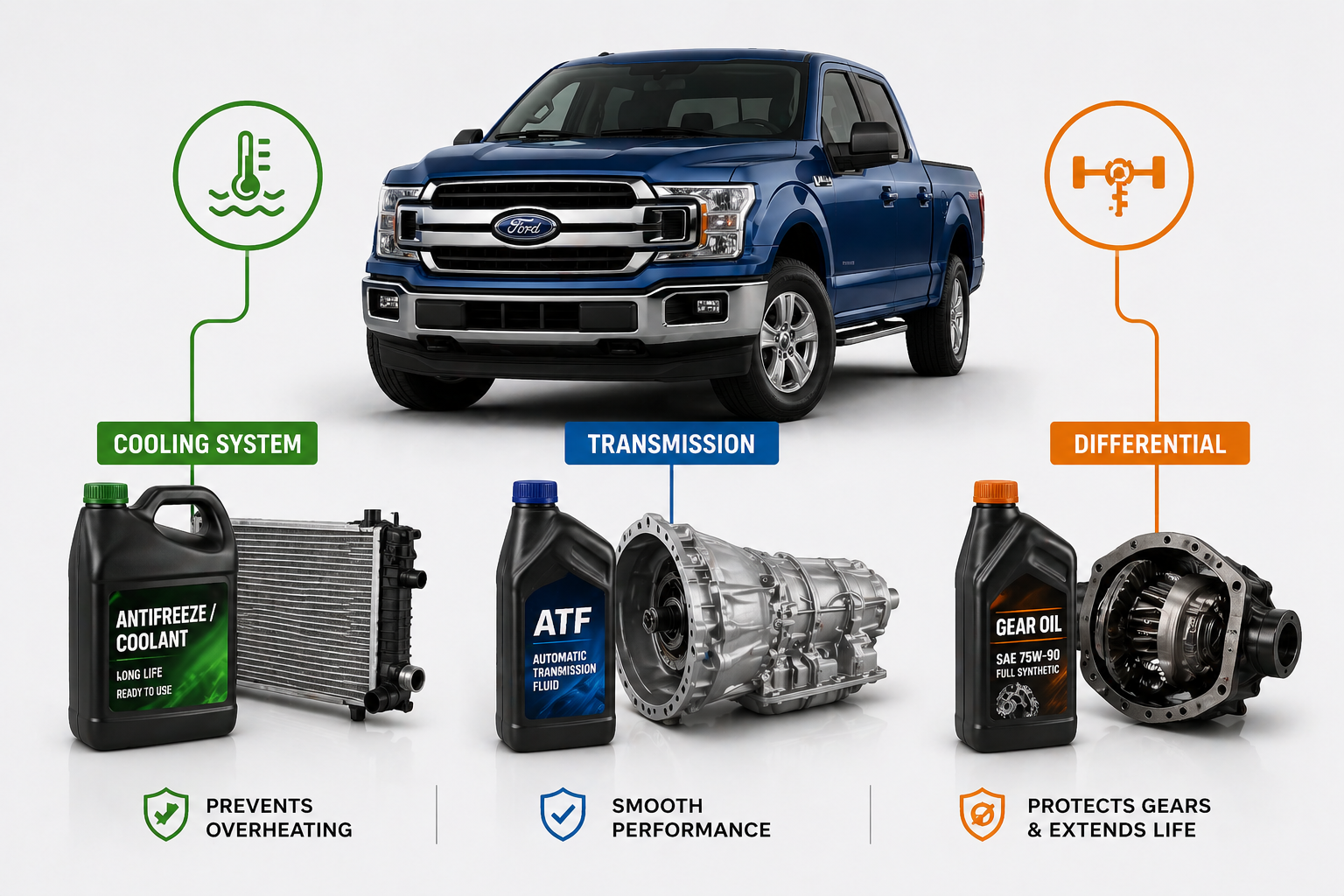
- Coolant helps the engine stay within a safe temperature range while protecting internal metal surfaces from corrosion. If a radiator is clogged, cracked, or leaking, the cooling system may struggle even when the reservoir looks full.
- Transmission fluid lubricates internal parts, supports hydraulic pressure, and helps control heat. Low or worn fluid may show up as delayed engagement, slipping, shuddering, rough shifts, whining, or a burnt smell.
- Differential oil protects gears and bearings that transfer power to the wheels. Trucks that tow, haul, or run in stop-and-go service place extra load on these parts. Low or old gear oil can contribute to whining, chatter, vibration, or metal wear.
A practical step-by-step maintenance plan
- Confirm the exact Ford year, model, trim, engine, transmission, drivetrain, and axle details before ordering anything.
- Check the Owner's Manual for the correct fluid specification and service guidance, especially for towing, hauling, commercial use, or severe-duty schedules.
- Inspect the cooling system for leaks, coolant smell, low coolant warnings, steam, cracked hoses, loose clamps, and radiator damage.
- Watch transmission behavior during normal driving. Delayed shifts, slipping, shuddering, or burnt odor should be diagnosed before adding fluid or replacing parts.
- Inspect differential covers, axle seals, and pinion seals for leaks. Listen for gear whine or chatter during acceleration, turning, or load changes.
- Replace fluids and related parts with OEM-fit options that match Ford requirements. After service, recheck levels and look for fresh leaks.
- Track service dates and mileage. This helps DIY owners and fleet managers plan maintenance before small problems become expensive repairs.
Recommended OEM parts for Ford fluid service
Use OEM-fit parts and fluids when maintenance affects cooling, shifting, towing, hauling, or drivetrain protection. Ford antifreeze helps manage engine temperature and corrosion protection. Ford transmission fluid helps support the correct shift feel and hydraulic operation for the specific transmission. Ford gear and differential oil protects axle gears and bearings under load. Ford radiators and cooling parts can help restore heat transfer when leaks, blockage, or damage affect temperature control. If a manual transmission has confirmed internal damage, Ford complete manual transmissions may be considered for a more complete repair.
OEM parts are a value-focused choice because they are built around Ford fitment and specifications. That can reduce guesswork, avoid mismatched fluid concerns, and support dependable repairs for work trucks, family vehicles, and fleet units.
Other Ford maintenance products
Use these Ford links to find the parts mentioned in this guide: Ford radiators and cooling parts, Ford antifreeze, Ford transmission fluid, Ford gear and differential oil, and Ford complete manual transmissions.
Frequently Asked Questions
Can low antifreeze make my Ford overheat?
Yes. Low antifreeze can reduce heat transfer and allow air into the cooling system, which may cause overheating, poor heater performance, or engine damage if ignored.
Is Ford transmission fluid the same for every model?
No. Fluid requirements vary by model year, transmission, engine, and drivetrain. Always confirm the correct specification before service.
When should Ford differential oil be changed?
Service timing depends on the vehicle and use. Towing, hauling, off-road driving, leaks, or high mileage can make differential service more urgent.
Can fluid maintenance help lower repair costs?
Yes. Routine fluid checks and correct OEM-fit fluids can help prevent heat and wear problems before they turn into larger drivetrain or cooling repairs.